
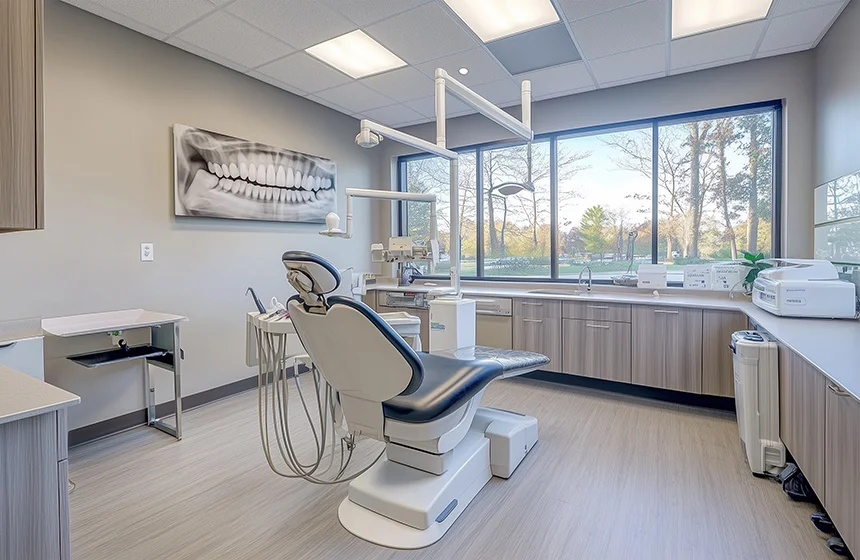
Subtract the compressor sound from the night in the hospital room and the afternoon in the clinic.
Overview
| Client | Domestic mid-sized medical device manufacturer (company name not disclosed) |
| Project Type | Joint OEM specification development + prototype evaluation |
| Period | 14 months (2 months for requirements definition + 4 months for prototyping + 8 months for evaluation) |
| Technology Provided | Custom application of fully rotating balanced cylinder devices for medical devices |
| Target Products | Mobile oxygen concentrator and dental air compressor |
Client Challenges
In medical settings, the quietness of the equipment determines a patient’s QoL.
Oxygen concentrators running continuously in late-night hospital rooms, dental compressors that operate continuously throughout treatment,
Both types mainly use piston systems, and vibration and noise have long been considered unavoidable.
We aimed to reduce by several tens of dB through dampers, sound-absorbing materials, and speed control, but we were approaching our limits.
It was during a conversation with Air Surf that we came up with the idea of changing the original power source.
What we worked on
Stage 1. Requirements definition (2 months)
- Noise target: Less than 40 dB(A) at a 1m distance of the device (dark noise level in the patient room)
- Vibration target: Acceleration of the installation surface less than 0.05 m/s² (to avoid impact on precision medical care)
- Size: Fits in the cabinet of existing oxygen concentrators
- Lifespan: Over 10 years with 24 hours of continuous operation 365 days a year
- Certification: Compliance with medical device power quality standards
Stage 2. Custom equipment design (4 months)
- Piston diameter and stroke have been redesigned to match the oxygen flow rate target (5L per minute).
- Changed the material of the second crankshaft to stainless steel (corrosion resistance in medical environments).
- The balance weight distribution is readjusted in three stages to compress vibration levels to the limit.
Stage 3. Evaluation Exam (8 months)
Prototype machines were continuously operated in the testing rooms of medical device manufacturers.
Along the way, an unexpected phenomenon (partial resonance) was discovered, and the structure of the base was revised twice.
Results (Prototype Evaluation Value)
| indicator | Existing Devices | New device | improvement margin | How it works for daily life |
| Noise level (1m distance) | 52 dB(A) | 38 dB(A) | -14 dB | From the level of “voices of conversation” to the level of “whispers” |
| vibrational acceleration (Installation surface) | 0.18 m/s² | 0.04 m/s² | -78% | It’s at a level where you don’t notice me even during detailed examinations. |
| energy consumption | 1.0 | 0.62 | -38% | Electricity is floating on the entire building of the hospital, and the number of households in ◯◯ is suspended. |
| continuous operation temperature rise | +35°C | +8°C | -77% | No need for a cooling fan for the device, extending its lifespan |
In 14 months, I reached a level where I didn’t mind moving around in a late-night hospital room.
This is a target value that has been considered ‘impossible’ within the company for over 10 years.
Air Surf is not a company that sells equipment, but a company that considers the physics of power together.
The biggest advantage was that they redesigned the equipment to meet our on-site needs. ── Head of Development Department (summarized with permission)
What I learned
In workplaces where “quietness” is a functional requirement, rather than simply extending noise reduction measures, the approach of physically eliminating the vibration source itself is more effective.
It offers advantages in cost, lifespan, and performance.
And that tranquility eventually transforms into the patient’s sleep and the peace of mind for those receiving treatment.
Only when it reaches that point is the technical work completed.